
Case Studies
Multi-Criteria Spatial Modelling and Least-Cost Corridor Optimisationogy
Queensland Government Client
Project Overview
Andrew Mackey led the spatial modelling and Multi-Criteria Decision Analysis framework for a strategic infrastructure corridor optimisation study undertaken for a Queensland government client. The work formed part of a multidisciplinary engineering engagement focused on identifying viable multi-user infrastructure corridors within a highly constrained industrial landscape.
The objective was to establish a defensible and transparent spatial decision-support framework capable of integrating environmental, physical, technical, planning, and tenure constraints into a structured corridor optimisation process.
Role and Technical Leadership
Andrew was responsible for:
Designing and implementing the MCDA framework
Structuring and normalising over 150 spatial constraint datasets
Developing cumulative impedance surfaces
Implementing least-cost corridor modelling
Quantifying comparative performance between alternative corridor alignments
Advising on constraint hierarchy and weighting logic
All spatial modelling architecture and analytical workflows were designed and executed by Andrew.
Method
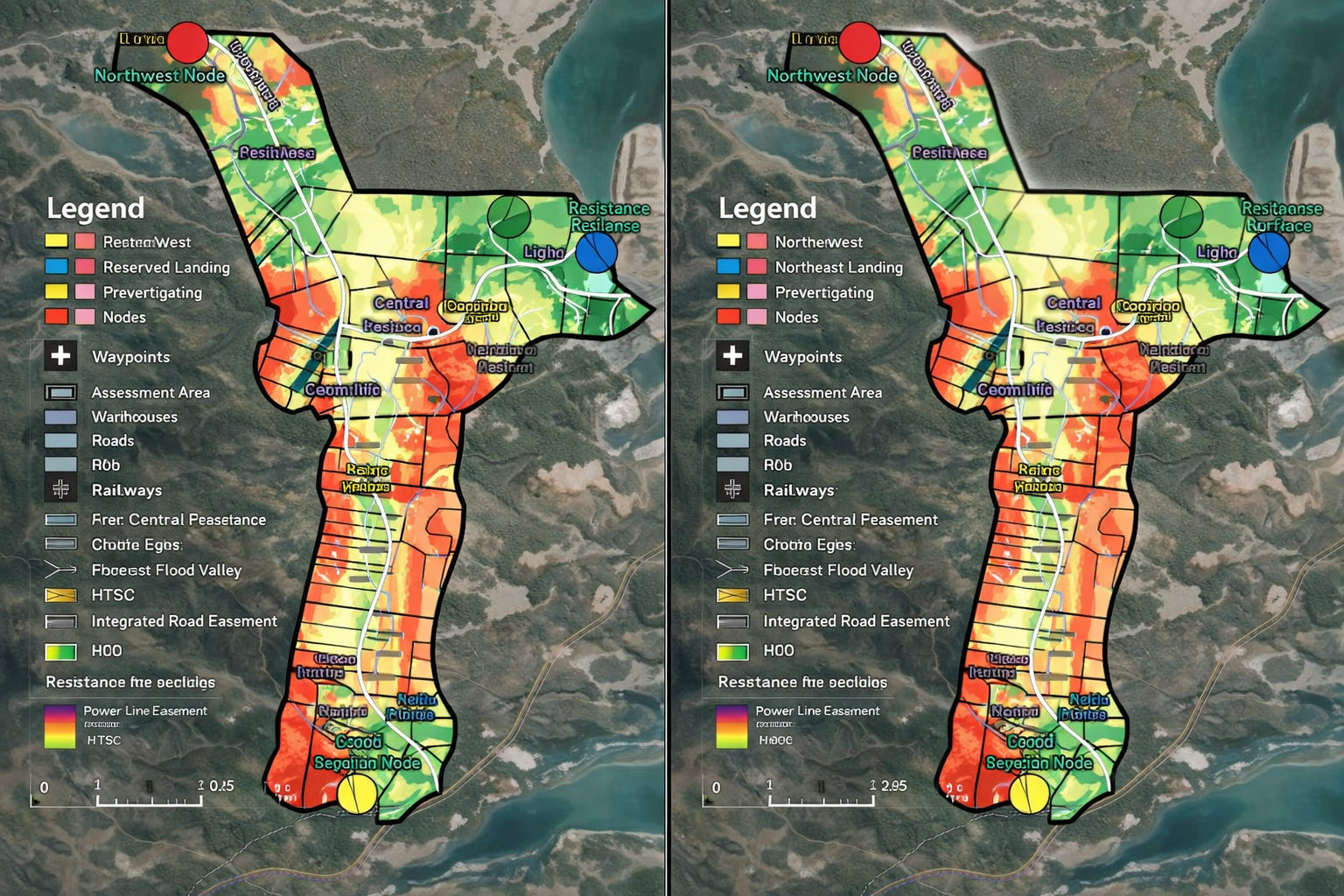
Constraint datasets were screened, classified, and normalised to a consistent impedance scale. A weighted overlay framework was developed to integrate heterogeneous constraints into a cumulative cost surface.
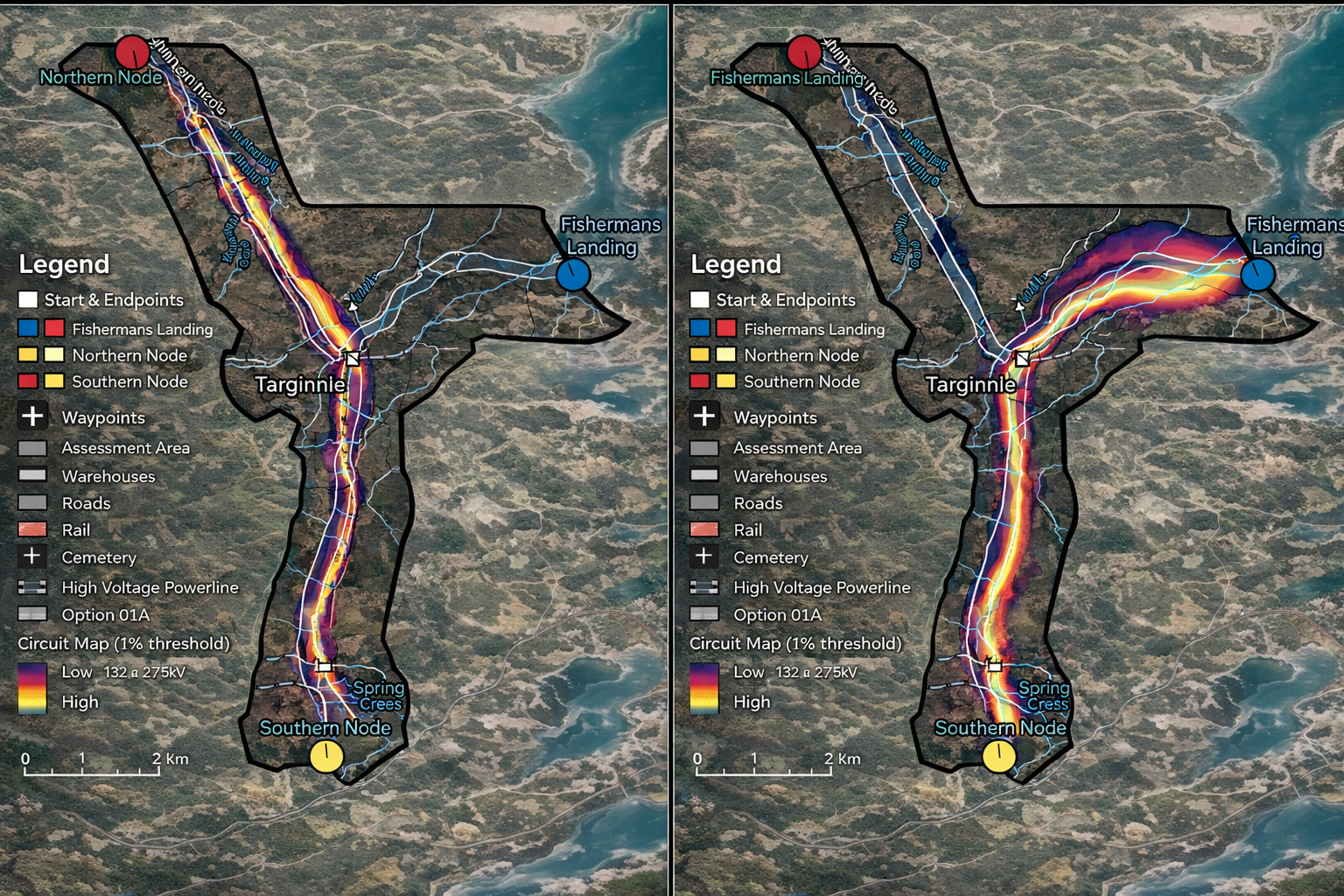
Least-cost corridor modelling was then applied. Unlike a single least-cost path, this approach identifies a flexible low-impedance corridor zone between defined nodes. This preserves alignment optionality while minimising overall constraint exposure, making it appropriate for early-stage strategic planning.
Outcome
The modelling generated multiple corridor alternatives and enabled quantitative comparison of route performance. One refined option demonstrated approximately 21 percent reduction in cumulative impedance relative to the original conceptual alignment.
The work provided a defensible basis for corridor rationalisation, reducing uncertainty and enabling structured trade-off assessment between environmental impact, constructability, and land tenure considerations.
Subscribe to our newsletter.
Sign up with your email address to receive news and updates.